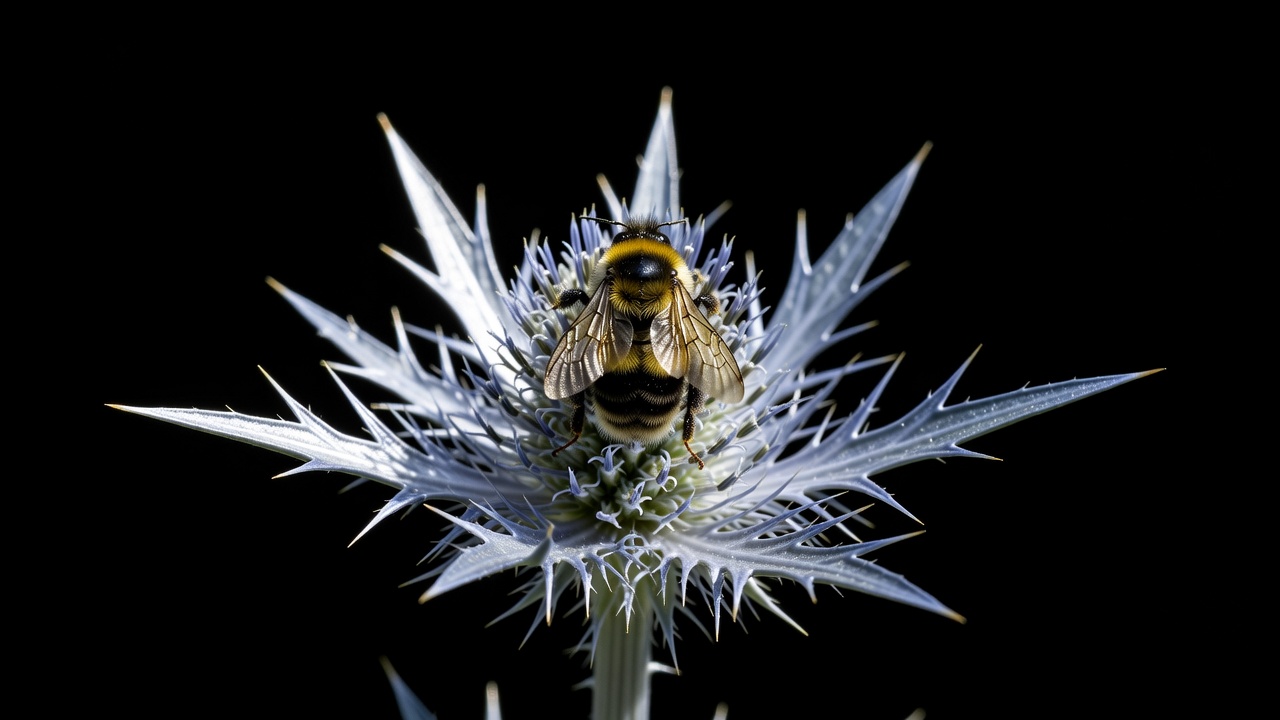
A garden of curiosities does not have to be a museum. Many of the most distinctive plants are also excellent sources of nectar and pollen, and a planting that feeds insects is more alive — literally humming — than one that only looks good. The principles are simple; the plant choices can be as unusual as you like.
What pollinators actually need
- Accessible flowers. Single, open flowers usually offer more reachable pollen and nectar than heavily doubled forms, where extra petals replace the reproductive parts.
- A long season. Early-emerging queen bumblebees need food in late winter; late broods still forage in autumn.
- Different shapes. Long-tongued bumblebees reach into tubular flowers, while hoverflies and many solitary bees need shallow, flat ones.
- Somewhere to live. Bare, undisturbed soil for ground-nesting bees, hollow stems left standing over winter and a shallow water source.
The Royal Horticultural Society's Plants for Pollinators lists and, in North America, the Xerces Society's regional plant guides are reliable starting points for choosing plants suited to your area.
Unusual plants that bees love
Globe thistle (Echinops ritro) forms perfect metallic spheres that bumblebees crawl over for hours. Sea hollies are equally architectural: Eryngium giganteum is nicknamed "Miss Willmott's Ghost" after the Edwardian plantswoman Ellen Willmott, who was said to scatter its seed secretly in the gardens she visited. Its silver bracts glow at dusk.
Honeywort (Cerinthe major 'Purpurascens') has waxy, blue-grey leaves and nodding purple bells adored by bumblebees; it self-sows gently. Drumstick alliums (Allium sphaerocephalon) add claret pompoms in midsummer, while Verbena bonariensis floats lilac heads on see-through stems that butterflies visit until frost. Anise hyssops (Agastache) and shrubby salvias offer long-season nectar and aromatic foliage.
For the shoulders of the year, plant Crocus tommasinianus and lungworts (Pulmonaria) for late winter, and do not rush to cut back ivy: its autumn flowers are one of the last big nectar sources of the year.
Container gardening for curious plants
Pots let you grow plants your soil or climate cannot support, and move them into the spotlight when they peak. A few rules make all the difference:
- Go bigger. Larger volumes of compost dry out and overheat more slowly. A 40 cm pot is far easier to manage than several small ones.
- Drainage is non-negotiable. Every pot needs holes; raise pots on feet in winter so water can escape.
- Choose material deliberately. Terracotta breathes and suits succulents and Mediterranean plants; glazed ceramic holds moisture for thirsty lilies and colocasia; dark metal heats up quickly in sun.
- Use peat-free compost, adding grit for drainage-loving plants and loam-based mixes for long-term shrubs.
- Feed regularly. Nutrients wash out of pots quickly; a liquid feed every two weeks in the growing season keeps plants performing.
The familiar "thriller, filler, spiller" formula is a useful start, but for a distinctive look try single-specimen pots grouped together: one Agave, one regal lily, one honeywort, each in its own container, arranged in a tight cluster of varied heights.
Designing for every season
The Dutch designer Piet Oudolf, known for the planting on New York's High Line, champions plants that look good as they die: seedheads, bleached grasses and the dark skeletons of coneflowers carry structure through winter and shelter insects. Beth Chatto's famous Gravel Garden in Essex, planted in 1991 on a former car park and never irrigated since, shows that a drought-tolerant palette can stay interesting through the hottest summers. Borrow both ideas: choose plants for their whole life cycle, not only their flowering fortnight.
A twelve-month container sequence
| Months | Pot stars | Pollinator value |
|---|---|---|
| Jan–Mar | Crocus tommasinianus, Sarcococca, Pulmonaria | Early food for queen bumblebees |
| Apr–May | Cerinthe, Fritillaria persica, Allium | Long-tongued bees |
| Jun–Jul | Lilium regale, Eryngium, Agastache | Bees, hoverflies, evening moths |
| Aug–Sep | Verbena bonariensis, salvias, Echinops | Butterflies and late bees |
| Oct–Dec | Seedheads, ivy flowers, evergreen grasses | Late nectar and winter shelter |